Adaptability or: why real change is so difficult
Let's do a quick check-in: how many of your New Year's resolutions did you stick to now? Why we ask? Studie show that Quitter's day usually happends between 9 and 17 January of the new year, which is when most people abandon their resolutions.
Date: 9. February 2026
Author: Nicole Neubauer
Categories: Personality Assessments, Insights, metaLecture, Teams
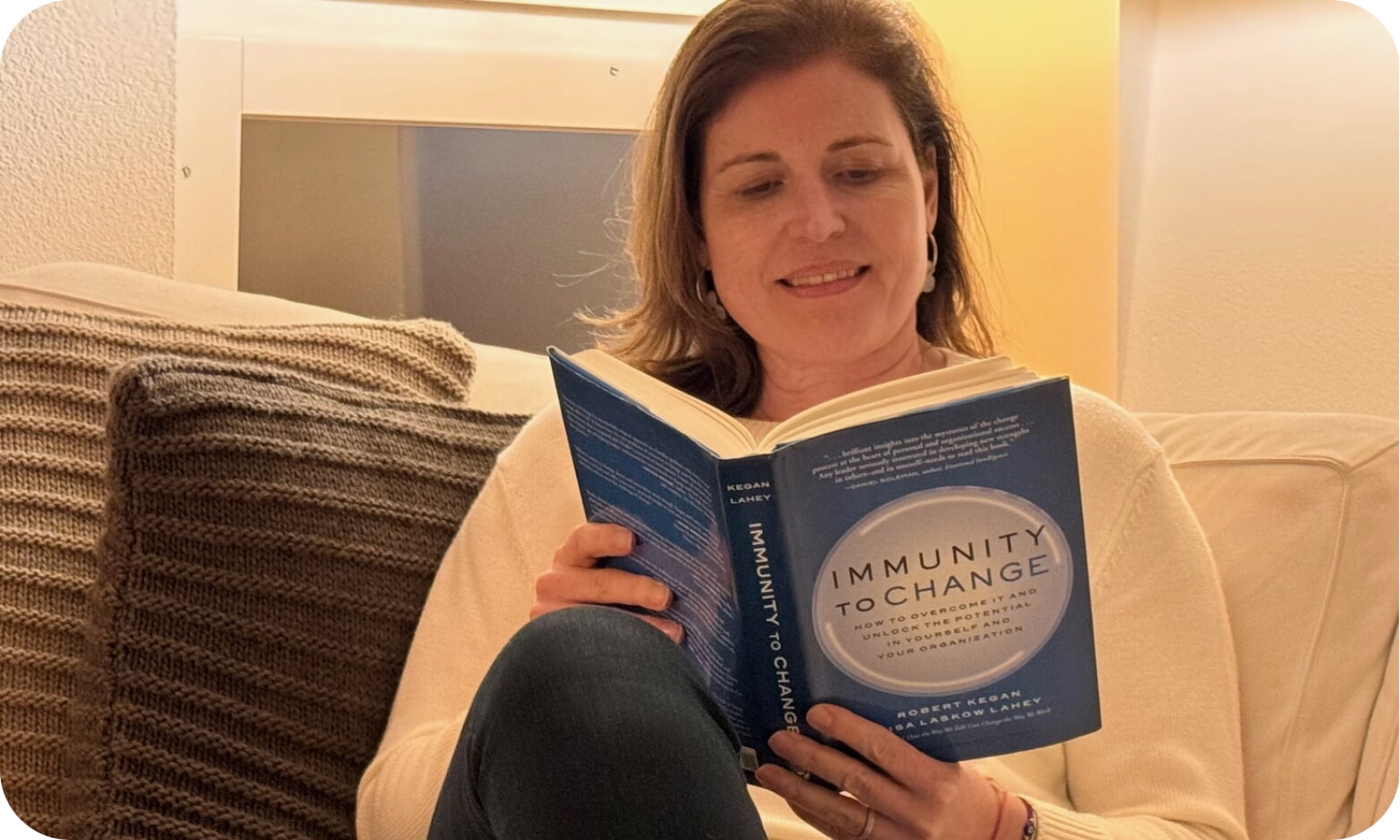
Book recommendation of the month
Fact is many people want to change and yet, they fail. Why is that? To better understand this pheonomenon, here’s my book recommendation of the month: Immunity to Change by Robert Kegan and Lisa Lahey.
In their book, the authors show that change is not simply a question of motivation or discipline, but that our own behavior often unconsciously works against our goals.
The invisible inner “immunity”
We can both for and against change at the same time. In addition to our conscious goals, there is an invisible inner “immunity” that protects us. This immunity is not irrational resistance, but an intelligent protective mechanism: it protects us from risks that we may unconsciously fear: As a results: we want to change something, but often act in exactly the opposite way. The “Immunity to Change” model makes this inner conflict visible and helps to make real change possible.
The four elements of the Immunity to Change Map
- My improvement goal
The specific behavior we want to change.
Example: ‘I want to speak more clearly and concisely in meetings.’
2. Counteracting behaviors
The actual actions that stand in the way of the goal.
Example: ‘I explain things for too long, disgress, justify myself’
3. Hidden, competing commitments
Unconscious commitments that block us.
Example: ‘I’m not allowed to appear incompetent. I have to explain everything.’
4. Big assumptions
Deeply held beliefs that seem like irrefutable facts.
Example: ‘If I keep it short, others will think I have nothing to contribute’
These assumptions are often unconscious, but they strongly influence our behavior.
Why the model is so effective
- It does not condemn resistance. Behavior that blocks change is interpreted as a sensible protective mechanism.
- It connects mindset, emotions and behavior and shows that change is not only external, but also happens internally.
- It enables adaptive development: you change not only your behavior, but also the self-image from which the behavior stems.
The lever for sustainable change
Sustainable change does not come about through more discipline, but through:
- Raising awareness of competing commitments
- Testing major assumptions through small, safe experiments
- Buiding a more complex self-image that allows or new options for action
Conclusion
Immunity to change shows that change is not just a matter of willpower. It is an interplay of conscious goals, unconscious defence mechanisms and deeply rooted assumptions and values. Those who recognise these mechanisms can achieve genuine, lasting change.
And of course, there’s a connection to Hogan
The Hogan personality assessments, here the inside of personality (MVPI), will show us individually what matters to us and what ultimately drives our behavior. Someone who is high on affiliation will always be a good networker and prefer to work in a team, someone low tradition will enjoy working in a start-up environment, but not in a highly ‘regulated’ organization. These insights gained from the “inside” of our personality help us to understand that we unconsciously promote or do not promote and explain why we might be immune to change.
Enjoey reading!
Nicole Neubauer
To place an order, click here: Link Amazon